
Ready to get started?
Easily integrate next-generation payments and financial data into any app. Build powerful products your customers love.
SHARE ARTICLE


 Share link copied!
The first rent instalment of new batch students is due and finance inbox is filling with screenshots of bank transfers. Some payments carry the right reference while others show a parent’s surname or cover two flatmates. Across a 500-bed building, these transactions make it difficult to understand which student still owes rent.
For student accommodation operators, collecting payments means keeping every student’s balance accurate, including deposits, part-payments and money received from parents. An unmatched transfer can leave someone marked overdue even after they have paid.
The student accommodation providers can collect rent online through Direct Debit, cards, manual bank transfers or Pay by Bank. Each method brings different fees, payment timings and reconciliation tasks. Rent collection software needs to connect those payments to the correct student and instalment.
This blog compares the payment methods, calculates collection fees and explains how to handle common exceptions. It also covers deposit protection, student accommodation payment plans and the integration checks worth making before choosing a rent collection service.
How Do Students Pay Rent Throughout the Academic Year?
Student accommodation payment plans may be monthly, termly or upfront, depending on the agreement and applicable tenancy rules.
For UK’s assured periodic tenancies, advance rent is generally limited to one month after signing and before the tenancy starts. Eligible purpose-built student accommodation under an approved code can follow different arrangements, subject to its agreement and transitional rules.
Within those rules, student accommodation operators can collect rent online through Direct Debit, cards, bank transfers or Pay by Bank. Students or parents may make the payments, but each receipt must match the correct student and instalment.
Four Ways Student Accommodation Providers Collect Rent Online
Student accommodation providers can collect rent through Direct Debit, cards, manual bank transfers or Pay by Bank. Each method affects payment timing, collection costs and how finance teams match receipts. Each method involves different responsibilities for students and finance staff.
Direct Debit Collects Rent Against an Agreed Mandate
Direct Debit lets student accommodation operators collect agreed rent payments from an authorised bank account. Once the mandate is active, students or parents do not need to approve each scheduled rent collection.
Collections follow the Bacs processing cycle, so operators need to allow several working days. New mandates, bank holidays and the provider’s payout schedule can extend the time before funds arrive.
Payments can fail if the account has insufficient funds. The Direct Debit Guarantee provides refunds for collection errors, while genuine rent obligations remain payable.
When comparing a rent collection service, check transaction fees, monthly charges and any costs for failed collections or refunds. Confirm how failed payments appear in the rent account before scheduling another collection.
Card Payments Give Students Another Way to Pay
Cards can suit students who prefer card payments or lack a bank account supported by the operator’s bank-payment provider. Acceptance and fees depend on the card type and issuing country.
Atoa’s online card payments start at 1.3% plus 20p for UK debit and credit cards. Overseas cards may carry different charges, so check the applicable rate when budgeting for international student payments.
Card authorisation can happen within seconds, but funds arrive according to the payment provider’s payout schedule. Deposits collected by card remain subject to disputes and chargebacks.
Keep the booking agreement, payment receipt and cancellation terms linked to each transaction. These records help staff investigate disputes and explain what the payment covered.
Manual Bank Transfers Need Clear Payment References
Manual transfers may have no separate receiving fee, depending on the accommodation operator’s business bank tariff. The staff still need to identify each receipt and update the student’s balance.
A transfer labelled “Rent” is difficult to match when several students owe the same amount. Payments under a parent’s surname or covering several residents can require further checks.
Give each charge a reference number identifying the student and instalment. A room number alone can cause confusion when residents move or a new academic year begins.
Rent collection software can use bank feeds and matching rules to reduce manual work. Staff still need to review missing references, duplicate transfers and payments that differ from the expected amount.
Pay by Bank Lets Students Approve Each Instalment
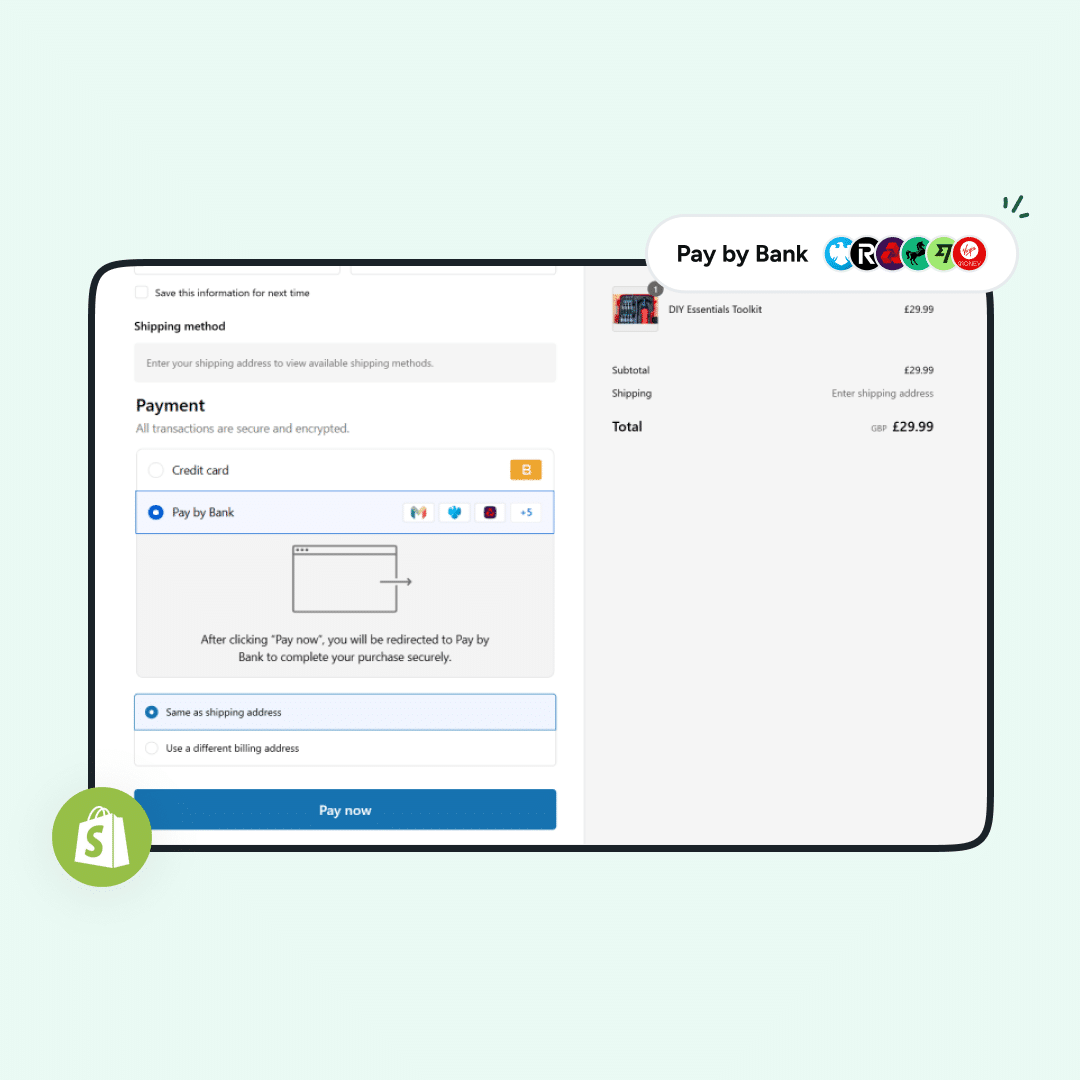
With Pay by Bank, students open a payment request, select their bank and approve the amount. They usually authenticate through their existing banking app, without downloading a separate payment app.
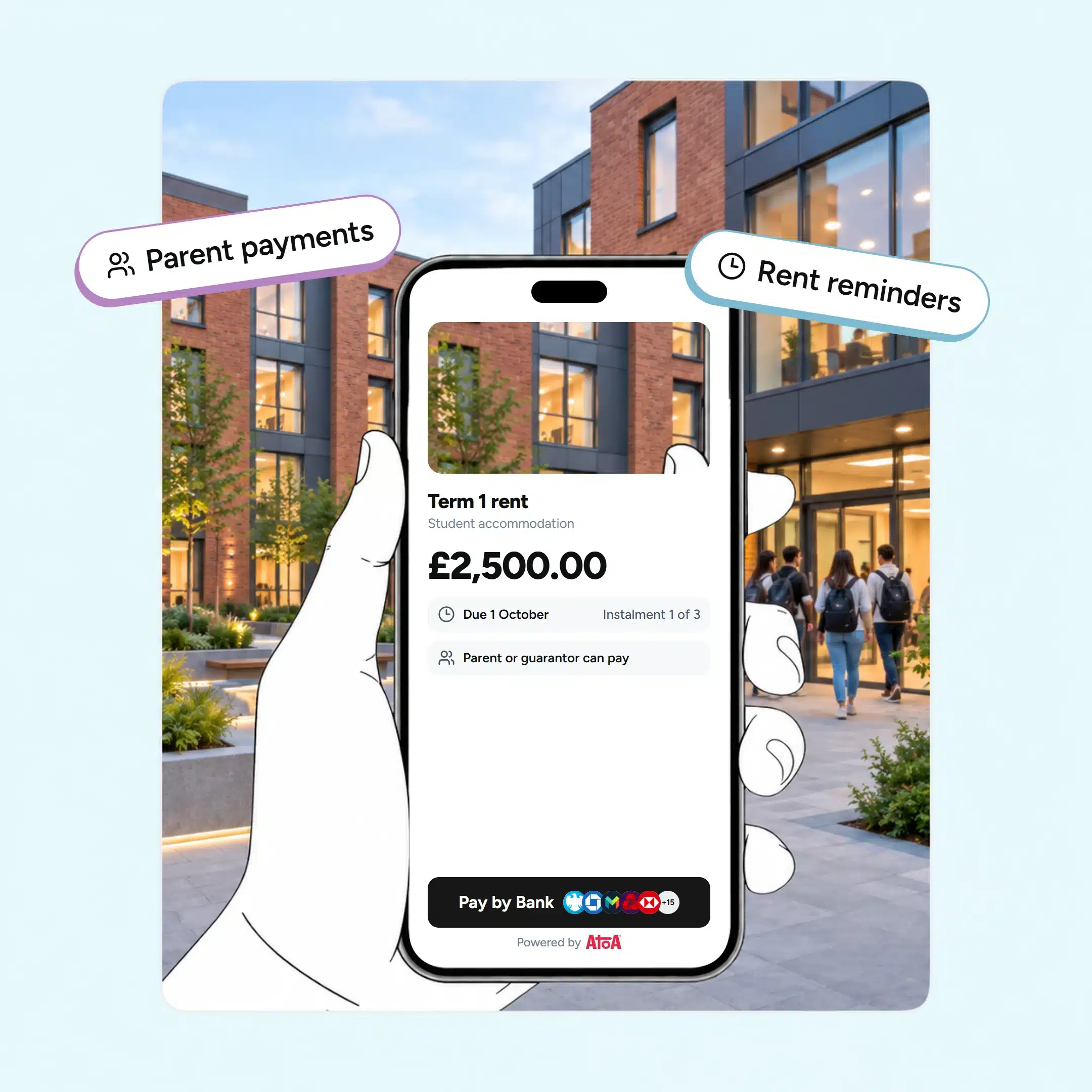
Accommodation operators can send a payment link or offer a QR code or supported invoice checkout. A parent can also approve a request from their own supported account, with the payment linked to the student’s instalment.
Successful payments typically confirm within seconds, although bank checks and connection issues can cause delays. The operator’s settlement arrangement determines when funds become available in its account.
Atoa’s online payment fees start at 0.7% plus 20p for Pay by Bank, before applicable VAT. Its standard single-payment limit is £15,000, subject to the payer’s bank restrictions. Higher limits require approval and additional verification.
Each request requires approval from the person paying. Sending links on scheduled dates does not create automatic recurring collections.
Pay by Bank payments are not subject to card-scheme chargebacks. Refund obligations, payment complaints and applicable bank-payment protections still apply.
What a Rent Collection Service Costs for 500 Beds
Consider a building where 500 students each pay a £2,500 termly instalment. The operator collects £1.25 million, assuming every payment succeeds and termly billing is permitted.
Using the Atoa starting rates discussed above, the processing fees would be:
| Payment method | Rate used | Fee per £2,500 payment | Fees for 500 payments |
|---|---|---|---|
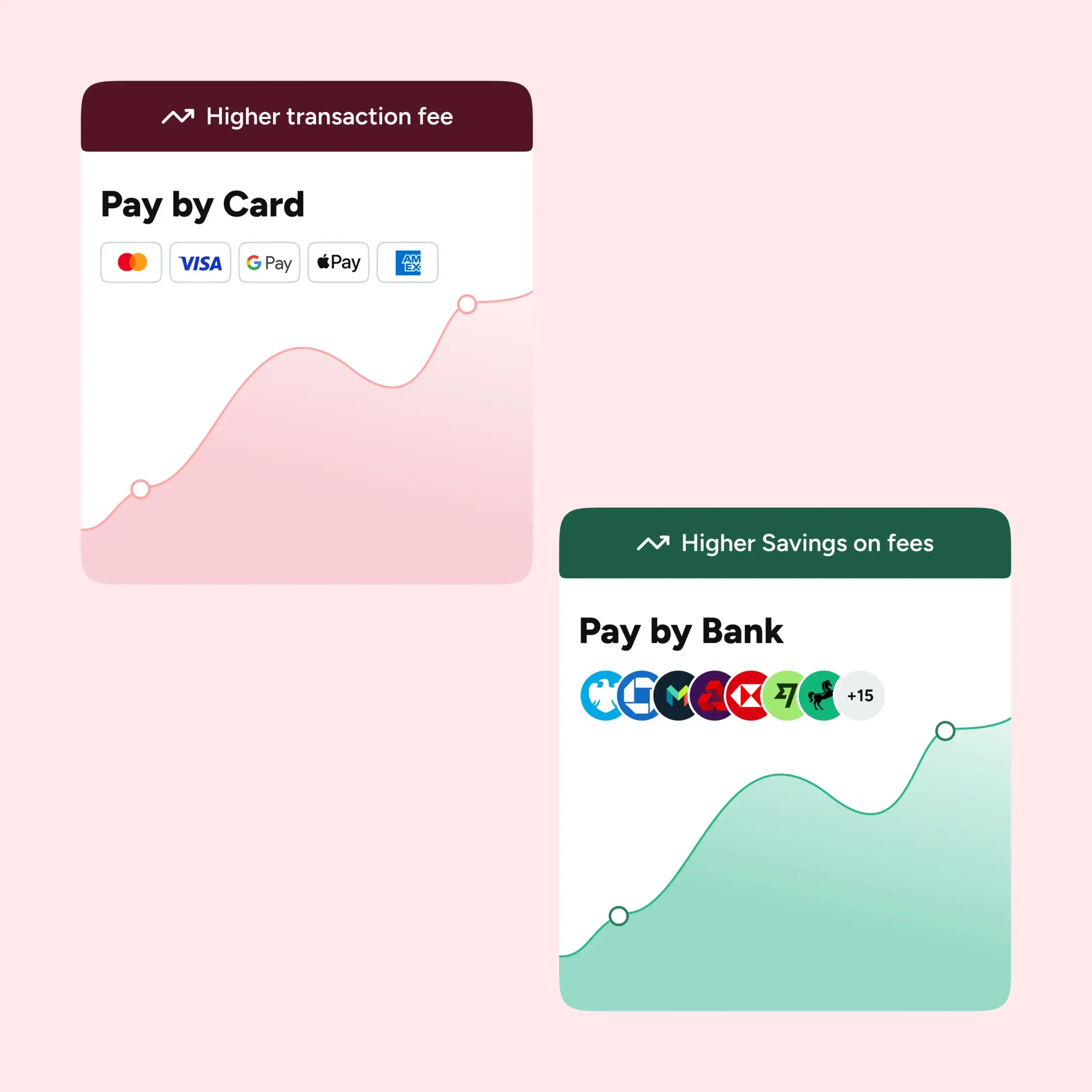
| Atoa online Pay by Bank | 0.7% + 20p | £17.70 | £8,850 |
| Atoa online UK card payments | 1.3% + 20p | £32.70 | £16,350 |
Illustrative processing fees only. Totals exclude applicable VAT, software charges and additional services. Actual costs depend on agreed pricing and card types.
For Direct Debit and manual transfers, use the provider’s quote or business bank tariff to calculate the same 500-payment example. Include any monthly charges and additional transaction fees.
Staff time also belongs in the calculation. If 100 payments each take six minutes to identify and match, that adds ten hours of administration.
Compare a rent collection service using both processing fees and the work needed to keep student balances accurate.
What a Rent Collection Service Costs for 500 Beds
Consider a building where 500 students each pay a £2,500 termly instalment. The operator collects £1.25 million, assuming every payment succeeds and termly billing is permitted.
Using the Atoa starting rates discussed above, the processing fees would be:
| Payment method | Rate used | Fee per £2,500 payment | Fees for 500 payments |
|---|---|---|---|
| Atoa online Pay by Bank | 0.7% + 20p | £17.70 | £8,850 |
| Atoa online UK card payments | 1.3% + 20p | £32.70 | £16,350 |
Illustrative processing fees only. Totals exclude applicable VAT, software charges and additional services. Actual costs depend on agreed pricing and card types.
For Direct Debit and manual transfers, use the provider’s quote or business bank tariff to calculate the same 500-payment example. Include any monthly charges and additional transaction fees.
Staff time also belongs in the calculation. If 100 payments each take six minutes to identify and match, that adds ten hours of administration.
Compare a rent collection service using both processing fees and the work needed to keep student balances accurate.
How Student Accommodation Operators Handle Parent and Guarantor Payments
A parent’s payment should reduce the student’s outstanding balance, even when their surnames differ. Keep the payer’s details alongside the student’s account rather than relying on the bank statement name.
For example, a parent pays £1,500 and the student contributes £1,000 towards a £2,500 instalment. Both payments belong against the same charge, with a separate transaction record for each receipt.
The account should show:
| Record | Example |
|---|---|
| Student and instalment | Student ID 1042, autumn rent |
| Amount due | £2,500 |
| Parent’s payment | £1,500 received |
| Student’s payment | £1,000 received |
| Outstanding balance | £0 |
Send payment confirmation once the receipts are matched, and stop reminders for that instalment. If one transfer covers two students, record how much belongs to each account.
A guarantor agreement does not itself authorise a bank collection. The person paying must separately approve the payment or provide the required mandate.
How Are Student Deposits Collected and Protected?
For assured tenancies in England, student accommodation providers must protect tenancy deposits in a government-approved scheme within 30 days of receiving them. Once both sides agree how much should be returned, repayment is due within ten days.
The deposit limits under the Tenant Fees Act depend on the annual rent:
- Below £50,000: the tenancy deposit cannot exceed five weeks’ rent.
- £50,000 or more: the limit is six weeks’ rent, where the Act applies.
- Holding deposits: the limit is one week’s rent to reserve the accommodation.
The tenancy type also matters when collecting student deposits. From 1 May 2026, assured periodic tenancies replaced assured shorthold tenancies in England, including those covering shared student houses.
Payment methods affect how disputes are handled, but they do not change applicable deposit-protection duties. Card deposits can face chargebacks, while Pay by Bank deposits fall outside card-scheme chargeback rules. Refund obligations and applicable bank-payment protections still remain.
How Rent Collection Software Reduces Rent Arrears
An overdue balance does not always mean the student has missed a payment. Money may have arrived under a parent’s name or without the correct reference. Rent collection software helps by connecting each payment to the right student and instalment before reminders go out.
A few practical steps make rent easier to pay and track:
- Send a clear payment request. Include the amount, due date and a payment link, QR code or supported invoice.
- Use a reference for each instalment. It should identify the student and the charge, helping staff match payments correctly.
- Agree a suitable payment schedule. Offer student accommodation payment plans allowed by the tenancy rules, and record any agreed part-payments.
- Make parent payments easy to identify. Link each receipt to the student’s account, even when someone else pays.
- Check receipts before sending reminders. Confirm matched payments and request only the balance still due.
Review missing references, partial payments and unexpected amounts separately. If rent remains unpaid, contact the student to understand the reason and agree the next step.
What to Check Before Choosing a Rent Collection Service
Most student accommodation operators collect payment through a property management system or lettings platform, so the practical question is what that system supports. Before choosing a rent collection service, clarify about these things:
- Check support for Pay by Bank, cards and Direct Debit, including any separate provider agreements.
- Understand how the system matches receipts, including parent payments and transfers with missing references.
- Check if it can send payment links, QR codes and invoices, and handle instalment schedules and part-payments.
- Confirm how staff return payments, track refunds and check when funds reach the bank account.
- Know how staff receive alerts, submit evidence and meet card-data security requirements.
- Check if it support multiple sites and teams from one dashboard, with reporting you can reconcile against your accounting software.
Confirm how each answer works in practice. Ask for a demonstration using a parent payment, a partial payment and a refund. Follow each through to the student’s balance. This shows how much work staff will need to do after a payment arrives.
Choosing How to Collect Rent Online: A Checklist
Choose payment methods around the rent schedule and the people paying. Use these checks before setting up collections:
- Check how quickly payment is confirmed. Pay by Bank avoids card-scheme chargebacks, although refund obligations remain.
- Consider Direct Debit when automatic collections would help, allowing time for mandate setup and processing.
- Calculate fees across the full schedule, including the fixed charge for each payment.
- Check supported banks, card acceptance and overseas payment charges before sending a request.
- Look for references linking each receipt to the correct student and instalment.
- Establish the applicable protection requirements before collecting money.
Conclusion
The best way to collect student rent depends on the payment schedule, collection costs and how students or parents prefer to pay. Student accommodation providers also need clear references and reliable payment matching to keep each student’s balance accurate.
Before the next intake, review where staff spend the most time checking payments. If matching receipts and chasing references take hours, explore payment options that connect with the accommodation’s existing software. Ask providers to demonstrate how they handle those everyday problems.
Frequently Asked Questions
What Is the Cheapest Way to Collect Student Rent?
Manual transfers may have no receiving fee, depending on the bank tariff. Using the earlier Atoa rates, a £2,500 payment costs £17.70 by Pay by Bank or £32.70 by UK card. These illustrative fees exclude applicable VAT and additional charges.
Can Rent Be Collected Through Open Banking?
Yes, students or parents can approve rent payments through a supported bank account using Pay by Bank. Each payment request requires their approval.
How Do Operators Reduce Rent Arrears?
Send clear payment requests, match receipts before issuing reminders and follow up on failed or incomplete payments. Record any agreed changes to payment dates.
Do Students Need a Separate App for Pay by Bank?
No separate Atoa app is needed. Students approve payments through their existing banking app or their bank’s supported login process.
How Are Student Deposits Collected and Refunded?
Deposits can be collected by card, Pay by Bank or bank transfer. Protection and repayment follow the applicable tenancy rules and scheme process. Keep refunds linked to the original payment.
What Student Accommodation Payment Plans Can Operators Offer?
Monthly or termly instalments depend on the tenancy rules and agreement. Direct Debit supports authorised automatic collections; standard Pay by Bank links require approval each time.
Atoa Payments Limited is authorised by the Financial Conduct Authority under the Payment Services Regulations 2017 as an Authorised Payment Institution to provide account information services and payment initiation services (FRN 1007647). Card payment services are provided by Rapyd Payments Limited, which is authorised by the FCA (FRN 900688).
SHARE ARTICLE
Share link copied!