
Ready to get started?
Easily integrate next-generation payments and financial data into any app. Build powerful products your customers love.
SHARE ARTICLE


 Share link copied!
A gym increases its monthly membership fee from £40 to £45. Members paying by standing order must update their bank instructions. Those paying by Direct Debit can move to the new amount after notice.
Until everyone makes the change, the accounts team may receive different amounts. Someone then has to check the records and contact members paying the old price.
This is where the standing order vs Direct Debit comparison becomes practical. Both support regular payments, but they give businesses different responsibilities and control.
This guide explains those differences, including setup, costs and refund obligations. It also covers where variable recurring payments fit.
What’s the Difference Between a Standing Order and a Direct Debit?
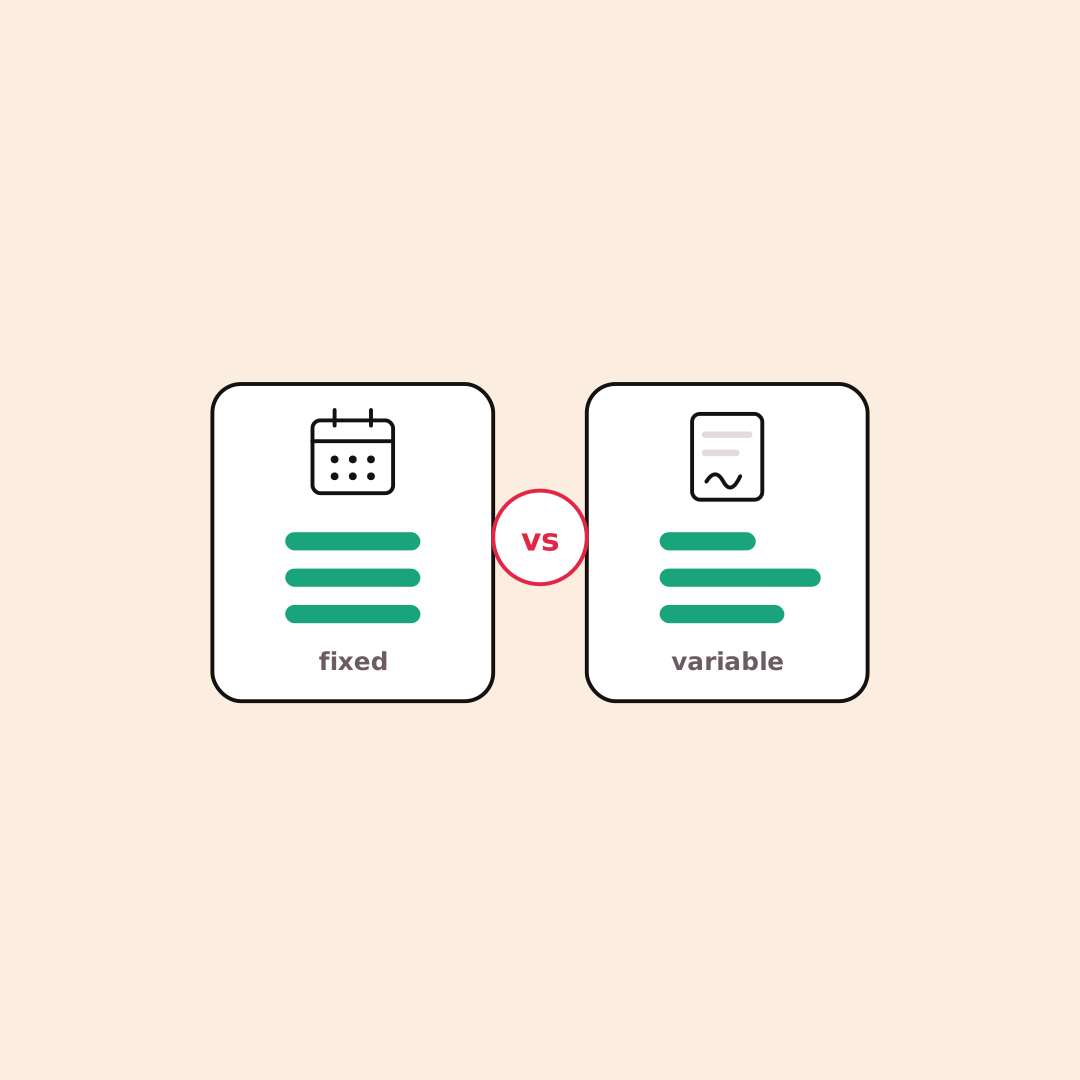
The main difference between the two is who instructs each payment. A standing order is a bank instruction created by the customer. It sends a fixed amount on a regular schedule. The customer controls changes to the amount, payment date and cancellation.
A Direct Debit authorises a business to collect payments from the customer’s account. Collections can stay fixed or vary according to the agreement. The business provides advance notice of changes to the amount, date or frequency.
Both methods are suitable for regular bills. Standing orders work well for stable amounts, while Direct Debit accommodates changing charges.
For example, a consultancy might receive the same monthly retainer by standing order. A service provider billing for variable usage may prefer Direct Debit.
Standing order vs Direct Debit: comparison for businesses
| What matters | Standing order | Direct Debit |
|---|---|---|
| Setting up payments | Customer creates the bank instruction | Customer authorises collections through a mandate |
| Payment amount | Fixed until the customer changes it | Fixed or variable under the agreement |
| Changing the schedule | Customer updates the instruction | Business changes collections with appropriate notice |
| Collection process | Customer’s bank sends the payment | Business submits a collection through its provider |
| Tracking missed payments | Business checks expected receipts against bank records | Provider reports collection outcomes |
| Customer protection | Bank-transfer rules and applicable legal rights | Direct Debit Guarantee covers payment errors |
| Business costs | Bank-account charges and administrative time | Provider charges and administrative time |
| Typical use | Fixed retainers and regular agreed payments | Memberships, bills and variable subscription charges |
The most useful distinction is control over the next collection. A standing order relies on the customer keeping the instruction current. Direct Debit lets the business manage collections within the authorised arrangement. Neither method guarantees that funds will be available when payment falls due.
How Long Do Payments Take?
Standing orders commonly use Faster Payments, which usually transfers money quickly. Banks may apply working-day rules to scheduled payments, so check the account terms.
Direct Debit follows the Bacs processing cycle:
- Input day: The business or provider submits the collection file.
- Processing day: Banks receive and process the payment instructions.
- Entry day: The customer’s account is debited and the receiving account credited.
These are working days, so weekends and bank holidays affect scheduling. A provider may also apply its own submission deadlines and payout arrangements. The Bacs collection cycle covers processing, rather than the whole onboarding period.
For cash-flow planning, confirm when collections must be submitted and when funds become available. Those dates matter more than a general promise of fast payments.
How to Set up Direct Debit for a Business
Businesses can arrange collections through a sponsoring payment provider or a managed service. The right route depends on payment volumes and available administrative support.
A Service User Number identifies the organisation collecting through Bacs. Some managed providers collect under their own arrangements. Others help businesses operate with a separate Service User Number.
Confirm which arrangement applies before comparing quotes. It affects responsibilities, customer records and the process for changing providers.
Electronic mandate submission commonly uses AUDDIS. This service sends Direct Debit Instruction details to the customer’s bank. A managed provider may handle that work as part of its service. Bacs requires AUDDIS for new service users submitting directly.
Before the first collection, agree how the provider will handle:
- Customer authorisation and mandate records.
- Advance notices and collection schedules.
- Failed payments, cancellations and refunds.
- Reports, payouts and accounting records.
Setup times vary with provider checks and the chosen arrangement. Obtain a confirmed collection date before promising customers a billing schedule.
How Much Notice Does Direct Debit Require?
The normal notice period for direct debit is ten working days, unless another period is agreed. The notices cover changes to the collection amount, date or frequency.
This matters when increasing membership fees or adjusting usage-based bills. The billing system needs enough time to issue the required notice.
The Direct Debit Guarantee also covers payment errors by the collecting organisation or bank. A customer is entitled to a full, immediate bank refund for an erroneous collection. The underlying contract remains in place, including any money genuinely owed.
For example, a £60 collection against an agreed £40 bill needs investigation. A disagreement about service quality requires a separate review of the customer’s complaint.
Can a Direct Debit be Reversed?
Yes. A collection error can lead to a refund under the Guarantee. This may happen when an incorrect amount or an unauthorised payment is collected.
The business may then receive an indemnity claim through its provider. Bacs describes indemnity claims as the process for recovering refunded collections from service users.
Clear records help the business investigate what happened. Keep the mandate, collection notices, invoice and relevant customer correspondence together.
The provider should explain how claims arrive and which response deadlines apply. A named member of staff should monitor these alerts, especially during holidays.
Refunds received without entitlement must be repaid when the collecting organisation requests repayment. This helps distinguish customer protection from an unrestricted right to reverse valid bills.
What Do Standing Orders and Direct Debit Cost?
Standing orders often involve limited payment administration at setup. However, business-bank charges depend on the account tariff. Time spent matching receipts and following up on missing payments also matters.
Direct Debit providers may charge per collection, through a monthly plan, or both. Additional charges can apply to failed collections, refunds or other services.
Compare a realistic month of activity, including staff time. A provider with lower transaction fees may require more manual reconciliation.
For example, a clinic processing hundreds of monthly payments needs useful collection reports. A consultancy with five fixed retainers may manage comfortably through its bank feed.
The wider principle also applies when comparing payment gateway fees: include fixed charges and service costs alongside transaction rates.
Where Variable Recurring Payments Fit
Variable recurring payments, or VRP, allow repeated bank payments under one customer-approved consent. The consent defines limits, such as individual payment amounts and monthly totals.
An authorised payment provider can then initiate payments within those limits. Customers retain control of the consent, including the ability to withdraw it.
Open Banking distinguishes transfers between someone’s own accounts from commercial collections. Commercial VRP availability depends on bank participation, providers and supported uses.
This offers another option for recurring payments where the required service is available. It also makes the consent settings important. Businesses need to understand what happens when a bill exceeds the approved limit.
Atoa’s variable recurring payments page describes a sector-based rollout. It identifies utilities, government services, charities and financial services, with broader uses following. Subscription and online retail applications appear as later stages. Eligibility should therefore be confirmed for the specific business and customer banks.
How Do Refunds Work With Bank Payments?
Standing orders and VRP operate through bank-payment systems rather than card networks. Their refund and dispute arrangements differ from card chargebacks and the Direct Debit Guarantee.
Businesses still need a clear process for complaints, refunds and payment errors. Eligible bank transfers can also fall within fraud-reimbursement protections. Claims that bank payments have “nothing to reverse” overlook these responsibilities.
Which Method Suits Recurring Business Payments?
The standing order vs Direct Debit decision starts with the billing arrangement. How often does the amount change, and who should manage each collection?
Standing orders suit stable amounts and manageable customer numbers. Fixed retainers are one example of it. Payment references and regular reconciliation help identify missing or incorrect receipts.
Direct Debit suits scheduled collections that need central management. This can include memberships, service plans and subscription payments. Collection reporting and clear customer notices become especially useful as volumes increase.
VRP is worth considering where the required service is supported. Compare consent limits, payment reporting, costs and refund handling before switching an established arrangement.
Payment links suit invoices that customers approve individually. They offer flexibility when each bill needs review before payment. The customer completes a payment each time, so collections still depend on their response.
A business may use different methods for different customer groups. The aim is a collection process that fits the agreement and remains manageable.
Conclusion
Standing orders suit fixed payments managed by customers. Direct Debit gives businesses control over agreed collections, alongside notice and refund responsibilities. VRP adds another option where bank and provider support is available.
Compare the full cost, reporting and daily workload before making a change. A collection method earns its place when payments are easy to track and manage.
Frequently asked questions
Can a business change a customer’s standing order?
The customer controls changes through their bank. A business can provide updated payment details and request an amended instruction.
Does cancelling a payment cancel the subscription?
The subscription agreement remains separate from the payment instruction. Customers should follow the agreed cancellation process and settle any outstanding balance.
What happens when a recurring payment fails?
Check the bank receipt or provider’s collection report first. Contact the customer and arrange payment under the agreed terms. Provider reporting and retry options vary by payment method.
Can Direct Debit collect the same amount every month?
Yes, it supports fixed amounts as well as variable collections. Regular memberships and service plans can use the same agreed monthly charge.
Is a payment link an automatic recurring payment?
A standard payment link requires the customer to complete each payment. Automatic collections require an appropriate mandate or recurring-payment consent.
SHARE ARTICLE
Share link copied!