



Ready to get started?
Easily integrate next-generation payments and financial data into any app. Build powerful products your customers love.
SHARE ARTICLE


 Share link copied!
An invoice is two weeks overdue. You’ve already sent a reminder, and the customer promised to pay on Friday. Friday comes and goes, but the money still hasn’t arrived.
Do you send another email, call the customer, or issue a final demand?
Start by finding out what’s holding up the payment. It could be a missing purchase order number, an approval delay, or a missed payment run. Once you know the reason, agree on a payment date and follow up if it passes.
Below is a practical timeline for chasing unpaid invoices, ready-to-use payment reminder templates, a phone script, and the UK late payment rules businesses should understand. (The legal guidance focuses on commercial invoices in England and Wales.)
5 Important Checks Before Chasing an Unpaid Invoice
An overdue invoice doesn’t always mean a customer is refusing to pay. Missing information, incorrect details, or an invoice sent to the wrong person can hold up payment.
Before sending a reminder, check these five things:
- Invoice delivery: Did it reach the correct accounts payable contact? The person who ordered your services may not be responsible for processing payments.
- Invoice accuracy: Are the business details, amount, VAT, due date, and payment instructions correct? An invoice with incorrect details may be rejected.
- Purchase order number: Does the customer require a PO number or supplier reference? Some finance teams cannot approve an invoice without one.
- Payment status: Has the customer already paid? Check bank transactions and unmatched payments before sending another reminder.
- Outstanding disputes: Has the customer questioned the amount or the work delivered? Resolve genuine disputes rather than repeatedly chasing the same balance.
If the invoice contains an error, correct it promptly and agree with the customer how that affects the payment date. Check that it meets the UK invoice requirements, including any applicable VAT information.
When Does an Invoice Become Overdue in the UK?
An invoice generally becomes overdue once the agreed payment date has passed. If no payment date was agreed, GOV.UK states that a commercial payment becomes late 30 days after the customer receives the invoice or after the goods or services are supplied, whichever is later.
Businesses can agree payment terms longer than 60 days, but those terms must be fair to both parties. Public authorities generally have a 30-day payment period.
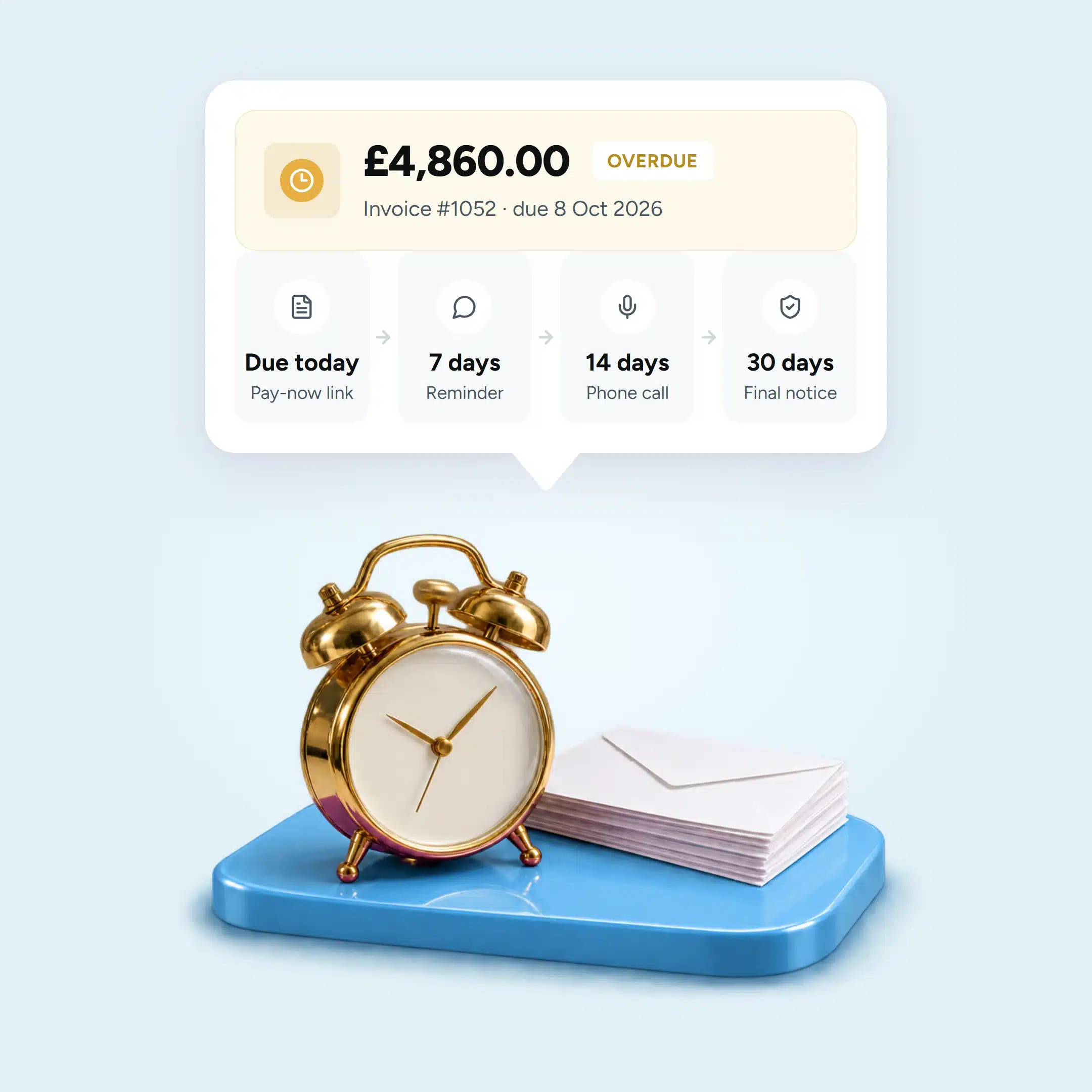
Overdue Invoice Chasing Timeline
A consistent reminder schedule helps businesses follow up on outstanding invoices without overwhelming customers or letting debts go unnoticed.
Use this timeline as a starting point for chasing overdue B2B invoices. Adjust the follow-ups based on your payment terms, the outstanding amount, and the customer’s response.
| Timing | Action | Expected Outcome |
|---|---|---|
| 3–5 days before the due date | Send a polite payment reminder | Confirm the invoice is received and scheduled for payment |
| On the due date | Send a short email reminder | Give the customer a convenient opportunity to pay |
| 7 days overdue | Send the first overdue invoice reminder; call if necessary | Identify the reason for non-payment and obtain a payment date |
| 14 days overdue | Send a firmer reminder and follow up by phone | Secure payment or resolve outstanding issues |
| 30 days overdue | Issue a final payment reminder | Set a clear deadline and explain possible escalation |
| If the invoice remains unpaid | Consider a formal letter before action | Follow the applicable pre-action procedure before a claim |
| After the required pre-action steps | Consider mediation or a court claim | Pursue recovery where commercially justified |
These are recommended follow-up intervals, not statutory deadlines. Adjust them to the contract, customer relationship, amount owed, and circumstances.
Record each reminder, customer response, payment promise, and follow-up date. If the matter eventually requires formal recovery, that history will help establish what happened.
Six Overdue Invoice Reminder Templates
The tone of your payment reminder should reflect how long the invoice has been outstanding.
A reminder sent before the due date should be friendly. An invoice that remains unpaid after several follow-ups needs a firmer message and a clear deadline.
Each email should include the invoice number, amount owed, original due date, and payment instructions. Attach a copy of the invoice so the customer does not need to request it again.
1. Polite Invoice Reminder Before the Due Date
Subject: Invoice [number] – Payment Due [date]
Hi [first name],
Just a reminder that invoice [number] for £[amount] is due on [date].
I’ve attached a copy for reference. You can arrange payment using [payment link or details].
If payment is already scheduled, thank you. Otherwise, let me know if anything needs updating.. Otherwise, please let me know if anything needs updating before payment.
Thanks,
[Your name]
2. Invoice Reminder on the Due Date
Subject: Invoice [number] for £[amount] Is Due Today
Hi [first name],
Invoice [number] for £[amount] is due today.
If payment hasn’t already been arranged, you can settle it using [payment link or details].
I’ve attached the invoice again for your records.
Please let me know if there’s anything holding up payment.
Thanks,
[Your name]
3. First Overdue Invoice Reminder – 7 Days Late
Subject: Payment Overdue – Invoice [number], £[amount]
Hi [first name],
I’m following up on invoice [number] for £[amount], which was due on [date].
It’s now seven days overdue, so I wanted to check whether anything is holding up payment.
Could you confirm when we can expect it?
I’ve attached the invoice again, and you can pay using [payment link or details].
If there’s a query or a missing PO number, let me know and I’ll help get it sorted.
Kind regards,
[Your name]
4. Second Overdue Invoice Reminder – 14 Days Late
Subject: Second Reminder – Outstanding Invoice [number]
Hi [first name],
I’m getting back in touch about invoice [number] for £[amount], originally due on [date].
We haven’t received payment following our previous reminder.
Please arrange payment by [specific date] or confirm when it will be processed.
If you’ve already paid, please send the payment reference so we can check our records.
Payment details: [payment link or bank details]
Regards,
[Your name]
5. Final Payment Reminder – 30 Days Late
Subject: Final Payment Reminder – Invoice [number], £[amount] Overdue
Dear [name],
Despite our previous reminders, invoice [number] for £[amount], due on [date], remains unpaid.
Please arrange payment by [specific date] or contact us before then if there is a genuine dispute requiring resolution.
Payment can be made using [payment link or bank details].
If we don’t receive payment or agree on a resolution by that date, we may need to consider formal recovery action, including issuing a letter before action.
Where applicable, we also reserve the right to claim statutory late payment interest and recovery costs.
We would prefer to resolve this directly and would appreciate your response.
Kind regards,
[Your name]
[Job title]
[Company]
Important: A final payment reminder is not necessarily a legally compliant letter before action. Formal debt claims have additional procedural requirements, explained below.
6. Short SMS Reminder for an Unpaid Invoice
Hi [name], this is [company]. Invoice [number] for £[amount] was due on [date] and remains outstanding. You can pay securely here: [payment link]. If you have any questions? Call [number].
SMS reminders can work well for customers who normally communicate by phone, particularly smaller businesses.
For customers using a formal accounts payable process, email is generally more appropriate. Make sure payment links use a recognisable, secure domain so customers can verify the message.
How to Chase an Unpaid Invoice by Phone
A phone call can resolve delays that several emails haven’t.
The aim is to establish where the invoice is in the payment process and agree on a specific next step.
Opening the conversation:
“Hi [name], it’s [your name] from [company]. I’m calling about invoice [number] for £[amount], which was due on [date]. Have you got a moment?”
Checking the payment status:
“Has the invoice been approved for payment, or is there anything you still need from us?”
Confirming the payment date:
“Thanks for confirming. Which payment run will it be included in?”
Closing the conversation:
“Great, so we can expect £[amount] by [date]. I’ll email the details over now.”
After the call, send a confirmation email recording the amount, promised payment date, and any action required from either party.
If the customer misses that deadline, refer to the previous agreement in your next reminder.
Handling Disputed Invoices, Partial Payments, and Missed Deadlines
Sending another reminder won’t always get an overdue invoice paid. Sometimes you need to address the reason the customer hasn’t settled the balance.
When a Customer Disputes an Invoice
Ask the customer to identify the disputed charges and explain the problem. Check the contract, delivery records, and previous correspondence.
If only part of the invoice is disputed, request payment of the undisputed balance while working towards a resolution for the remaining amount.
For example, if a customer disputes £500 of a £3,000 invoice, you could ask them to pay the undisputed £2,500 while the £500 charge is reviewed.
Keep a written record of the issue, any supporting evidence, and the agreed resolution.
When a Customer Cannot Pay the Full Amount
A structured payment plan may be more realistic than repeatedly demanding an amount the customer cannot currently settle.
For example, if £6,000 is outstanding and the customer offers £2,000 immediately, agree in writing on how and when the remaining £4,000 will be paid.
Record the balance, instalment dates, and what happens if a payment is missed. Make sure accepting a partial payment does not unintentionally settle the entire debt.
When a Customer Repeatedly Misses Payment Dates
Repeated promises such as “We’ll pay next week” aren’t particularly useful without a confirmed date.
Ask the customer when payment has been authorised, which payment run it will be included in, and how much will be paid.
If commitments continue to be missed, review whether further credit, a revised payment arrangement, or formal recovery is appropriate under the contract and applicable law.
Late Payment Interest and Debt Recovery Costs in the UK
Under the Late Payment of Commercial Debts (Interest) Act 1998, eligible businesses can claim statutory interest and recovery compensation when another business pays late.
How to Calculate Statutory Late Payment Interest
Statutory interest is calculated at 8 percentage points above the relevant Bank of England reference rate.
For a commercial debt becoming late during the second half of 2026, the reference rate is 3.75%, making the statutory rate 11.75% annually.
The calculation is:
Outstanding Debt × Annual Interest Rate × Days Overdue ÷ 365
For example, on an overdue invoice of £10,000:
| Calculation | Amount |
|---|---|
| Annual interest at 11.75% | £1,175 |
| Daily interest | Approximately £3.22 |
| Interest after 30 days | Approximately £96.58 |
This is simple interest, not compound interest.
The relevant reference rate is normally determined for a six-month period, using Bank Rate on 30 June or 31 December. A different contractual interest provision can affect whether statutory interest is available.
If you charge statutory interest, GOV.UK advises issuing a separate invoice for it.
Fixed Compensation for Late Commercial Payments
Eligible businesses may also claim fixed debt recovery compensation.
| Outstanding Debt | Fixed Compensation |
|---|---|
| Up to £999.99 | £40 |
| £1,000–£9,999.99 | £70 |
| £10,000 or more | £100 |
These amounts apply once per late payment, not per reminder.
Additional reasonable recovery costs may also be claimable where the legal conditions are met.
Businesses should check their contracts and the relevant rules before adding charges. GOV.UK provides guidance on late commercial payment interest and debt recovery.
You can also use the Small Business Commissioner’s interest calculator to estimate statutory interest on an outstanding commercial invoice.
Letters Before Action and Court Claims for Unpaid Invoices
When payment reminders and reasonable attempts to resolve an overdue invoice have failed, a formal letter before action may be the next step.
A letter before action should identify the debt, explain the basis of the claim, show how the amount was calculated, and give the customer a reasonable opportunity to respond.
The applicable procedure depends partly on who owes the money.
Recovering an Unpaid Invoice From a Limited Company
For straightforward claims against limited companies in England and Wales, the general Practice Direction on Pre-Action Conduct and Protocols will often apply, unless another specific protocol governs the claim.
It expects both parties to exchange relevant information and consider resolving the dispute before issuing proceedings.
A reasonable response period is generally 14 days for a straightforward case, with longer periods for more complex matters.
Recovering an Unpaid Invoice From a Sole Trader
Where a business is recovering a debt from an individual, including a sole trader, the Pre-Action Protocol for Debt Claims generally applies.
It requires a more detailed letter of claim, accompanying information, and a reply form. The debtor normally has 30 days to respond.
This means businesses should not use the same standard 14-day letter for every unpaid invoice.
Taking an Unpaid Invoice to Court
If the required pre-action steps have been completed without payment or resolution, the creditor may consider a money claim through the courts.
Before proceeding, assess the amount owed, the available evidence, the potential court costs, and whether the customer is likely to pay even if judgment is obtained.
For example, the published court issue fee in England and Wales for a money claim exceeding £5,000 but not exceeding £10,000 is £455 as of October 2026. Other fees may apply as proceedings develop.
Mediation or a negotiated settlement may be more proportionate, particularly where the amount is relatively small or genuinely disputed.
The official GOV.UK money claim guidance explains the process. For substantial or disputed debts, consider obtaining legal advice before issuing proceedings.
How to Reduce Late Payments and Improve Invoice Collection
Chasing unpaid invoices becomes easier when the invoicing and payment process is set up properly from the start.
Four improvements can prevent avoidable delays:
- Agree on payment terms upfront. Confirm the due date, billing contact, and any required PO number before sending an invoice.
- Send invoices promptly. Delaying an invoice after completing the work can delay the entire payment cycle.
- Make payment convenient. Include accurate payment instructions or a secure payment link so customers can pay without requesting further information.
- Keep payment records current. Match incoming payments to invoices promptly and stop reminders once payment is confirmed.
A payment link can be particularly useful when a customer agrees to settle an outstanding balance immediately.
Rather than manually entering bank details and the invoice reference, they can open a secure payment page and authorise the transaction.
However, a payment link won’t bypass a customer’s internal approval process or resolve a genuine invoice dispute. It removes payment friction once the customer is ready and authorised to pay.
FAQs
When does an invoice become overdue in the UK?
Once the payment date you agreed has passed. If you didn’t agree one, GOV.UK says a business payment is late 30 days after the customer receives the invoice or after you deliver the goods or service, whichever is later.
How often should you chase an overdue invoice?
A common routine for invoices to other businesses is a reminder 3 to 5 days before the due date, another on the day, then emails at 7, 14 and 30 days overdue with phone calls in between, followed by a letter before action.
What should a final demand letter include?
The invoice numbers and dates, the amount owed and how it’s calculated, including any statutory interest and compensation, the reminders already sent, a clear deadline and what you’ll do if it passes.
What happens if a customer ignores a letter before action?
In England and Wales you can make a claim in the county court, usually online through GOV.UK. The court fee depends on the amount claimed, including interest, and you may be able to claim it back if you win.
How does a payment link help get overdue invoices paid?
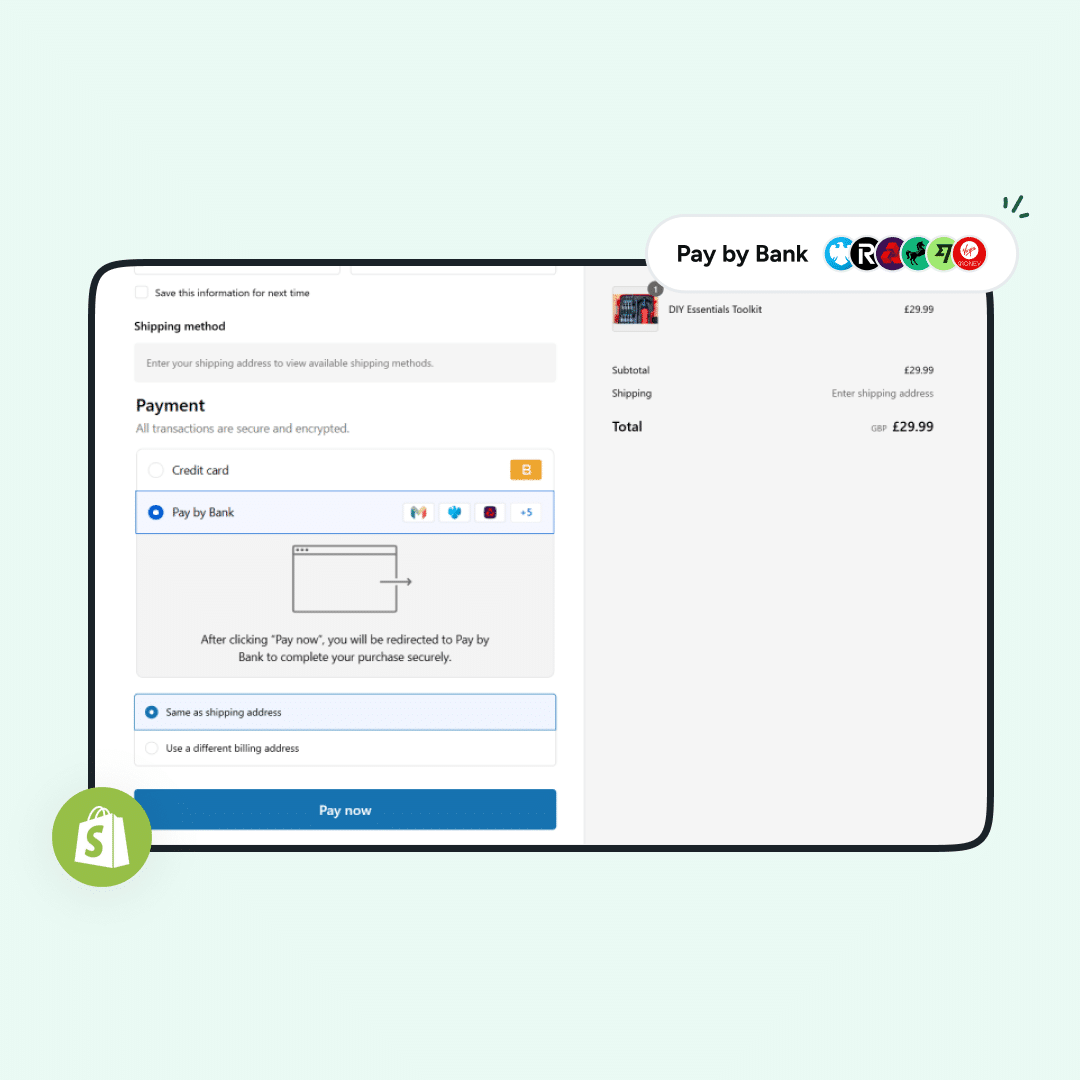
It removes the steps between agreeing to pay and paying. The customer taps the link in your reminder, chooses their bank and approves in their Bank app with the amount and reference filled in.

 CATEGORIES TO EXPLORE